
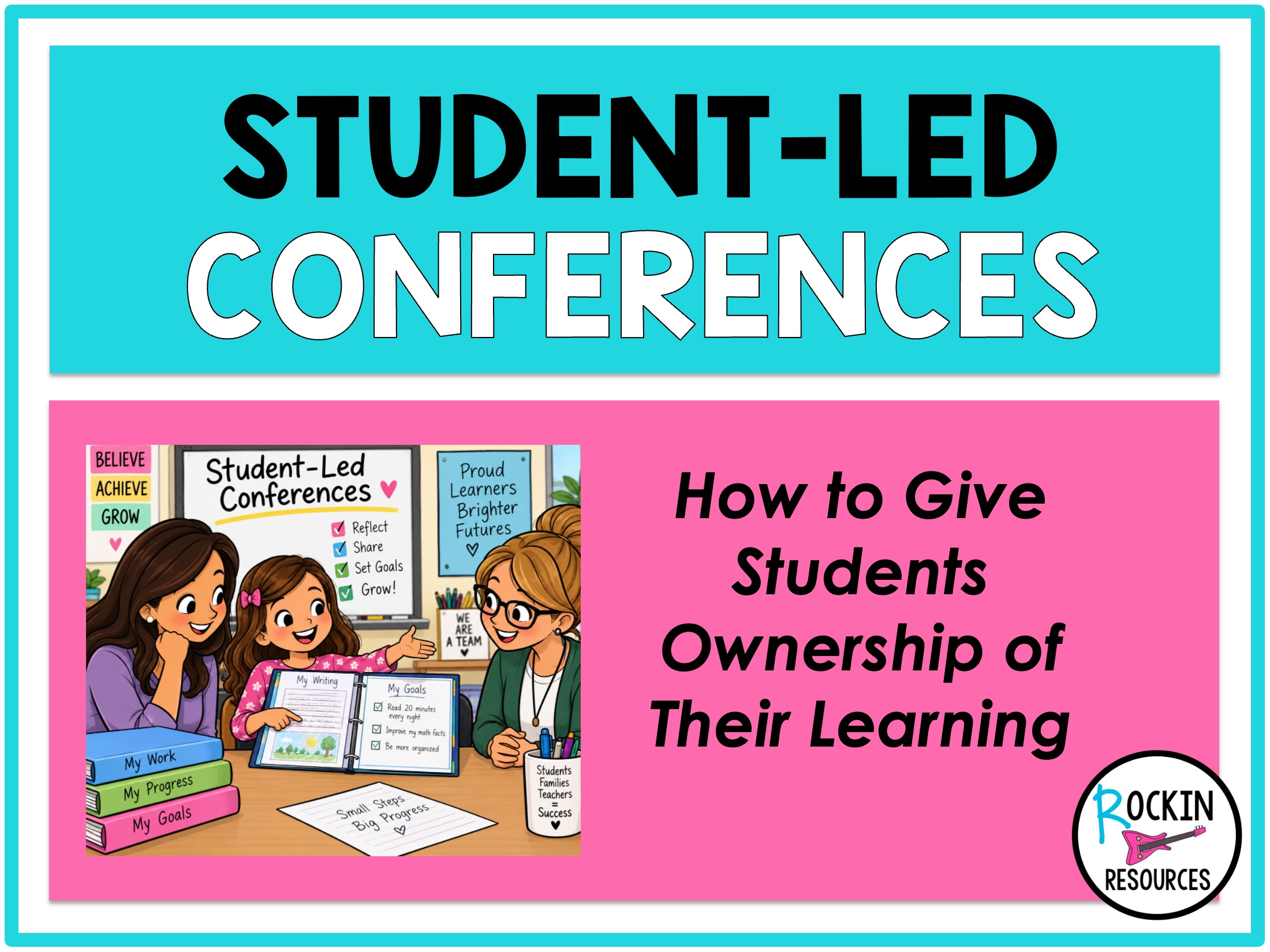
A successful student-led conference doesn’t begin when the parents walk through the door. Preparing students ahead of time is what makes the conference meaningful and helps them feel confident taking the lead. So, how do you give students ownership of their learning?
BEFORE THE CONFERENCE
1. Collect Student Work
Throughout the grading period, save examples of student work. You might ask students to return their take-home folders each week and keep selected work in individual hanging file folders. Don’t save only perfect papers! Include work that demonstrates progress and growth over time.
2. Create Student Portfolios
Create a portfolio for each student using a three-prong folder, binder, or digital portfolio. You can choose work samples yourself or allow students to select pieces they’re especially proud of. You may also want to create a subject-specific portfolio, such as a writing portfolio, to demonstrate progress throughout the year.
3. Have Students Complete a Self-Evaluation
Before the conference, ask students to reflect on areas such as behavior, class participation, responsibility, organization, study or work habits, effort, strengths, and areas for improvement.
Encourage students to provide examples whenever possible. Instead of simply writing, “I’m good at math,” a student might explain, “I’ve improved my multiplication facts because I’ve been practicing them every night.”
4. Gather Academic Information
Depending on your grade level, students can help organize and present grades, assessments, reading levels, MAP scores, standards mastered, work samples, or areas of growth. This helps students understand what their academic data means rather than simply seeing a collection of numbers and scores.
5. Reflect on Progress
Ask students to think about where they started and where they are now. What improved? What helped them improve? What are they most proud of? What still feels challenging?
This shifts the focus from simply earning a grade to recognizing growth, effort, and progress.
6. Set Goals
Have students create attainable short-term and long-term goals. A goal shouldn’t simply say: “I want to get better at reading.”
Help students identify a specific goal and, most importantly, determine the steps they’ll take to reach it.
Ask: “What are you going to DO to reach this goal?”
What Should Students Do to Prepare for a Student-Led Conference?
Students need preparation too! A checklist can help them feel confident and ready to take the lead. Encourage students to:
- Keep a portfolio of their best work. Choose pieces that show accomplishments, improvement, or something they’re especially proud of.
- Look through recent work. Review assignments from the past few weeks or grading period and notice areas of growth.
- Gather notebooks and other classroom materials. Students may want to use them as examples during the conference.
- Make notes about what they want to discuss. Sticky notes are perfect for marking important pages or assignments they want to share.
- Choose something they’ve learned that they can teach their parents. This is one of my favorite parts!
Imagine how proud students feel when they become the teacher! They can track their own progress, complete self-reflections and goals, practice their presentation, and show leadership!

DURING THE CONFERENCE
Now it’s time to let the student take the lead!
1. Let the Student Present
Have students share their work, demonstrate a skill, discuss their progress, and explain their goals. This is their time to shine!
2. Discuss the Student’s Reflection
Students can be surprisingly honest when evaluating themselves! After the student shares a self-reflection, the teacher can provide additional observations and feedback. This creates an opportunity for a meaningful conversation rather than a one-sided report.
3. Guide With Questions
Teachers don’t need to disappear from student-led conferences. Your role simply changes. Instead of doing all the talking, guide the conversation with thoughtful questions. Try questions such as:
- What are you most proud of?
- What was difficult for you?
- How did you improve?
- What would you like to get better at next?
- What can we do to help you?
4. Explain Test Scores and Academic Progress
Some information may need additional teacher explanation. Take time to clarify test scores, reading levels, grades, standards, or other academic data so both the student and parents understand the student’s progress.
5. Review and Adjust Goals
Look at the student’s goals together. Are they realistic? Are they specific? Can progress be measured? Does the goal need adjustment?
The goal should be challenging enough to encourage growth but attainable enough that the student doesn’t become discouraged.
6. Develop Actionable Strategies
A goal without a plan is just a wish! Once you establish a goal, determine exactly how the student will work toward it. For example:
GOAL: Improve reading comprehension.
ACTION STEPS: Read for 20 minutes each night, use a reading response strategy twice each week, and discuss reading with a parent or teacher.
7. Invite Parents Into the Plan
Ask parents for their ideas too! “What could we do at home to support this goal?” When students, parents, and teachers contribute to the plan, everyone understands their role in helping the student succeed.
8. End With Something Positive
Always take time to recognize the student’s accomplishments, effort, growth, and leadership. Students just took responsibility for discussing their own learning—that alone deserves recognition! Let them leave the conference feeling proud, supported, and motivated.
AFTER THE CONFERENCE
The conference may be over, but the goals shouldn’t be forgotten!
Check In Weekly
Set aside a few minutes each week to ask students about their goals.
- How are you doing?
- What have you done this week to work toward your goal?
- What’s working?
- Do you need help?
A quick weekly check-in keeps goals from becoming a piece of paper tucked away in a folder.
Continue Adding to Portfolios
Remind students to add new work that demonstrates growth, accomplishments, and newly mastered skills. By the next conference, they’ll have concrete evidence showing how far they’ve come!
Celebrate Progress
When students reach a goal, celebrate it! The reward doesn’t have to be something big. Recognition, a positive note home, a certificate, classroom privilege, or another simple reward can acknowledge their hard work.
Then?
Set a new goal!
This creates an ongoing cycle:
REFLECT → SET A GOAL → TAKE ACTION → CHECK PROGRESS → CELEBRATE → SET A NEW GOAL
What If a Student Can’t Attend the Conference?
No problem!
Student-led conference preparation is still valuable even when a student can’t attend. Use the student’s self-reflection, work samples, portfolio, progress data, and goals to help guide the conversation. This allows you to explain the student’s progress not only from the teacher’s perspective, but also through the child’s eyes.
You can even share some of the student’s exact reflections with parents so their voice is still represented during the conference.
Ready to Try Student-Led Conferences?
Student-led conferences give children something traditional parent-teacher conferences don’t always provide: a seat at the table. To make the process easier, my Editable Student-Led Conference & Parent-Teacher Conference Forms include student self-reflections, parent and teacher reflections, goal-setting forms, academic progress charts, conference schedules, signs, and other tools you can use before, during, and after your conferences.
Everything is designed to help you spend less time preparing paperwork and more time having meaningful conversations about student growth.
Rock on with your conferences!
Pam
Related Blog Posts:


Related Resources
-
Sale!

Conference Bundle STUDENT LED CONFERENCES Conference forms
Original price was: $5.00.$3.00Current price is: $3.00. -
Sale!
Parent Teacher Conference Forms- Editable
Original price was: $3.00.$2.00Current price is: $2.00.


