
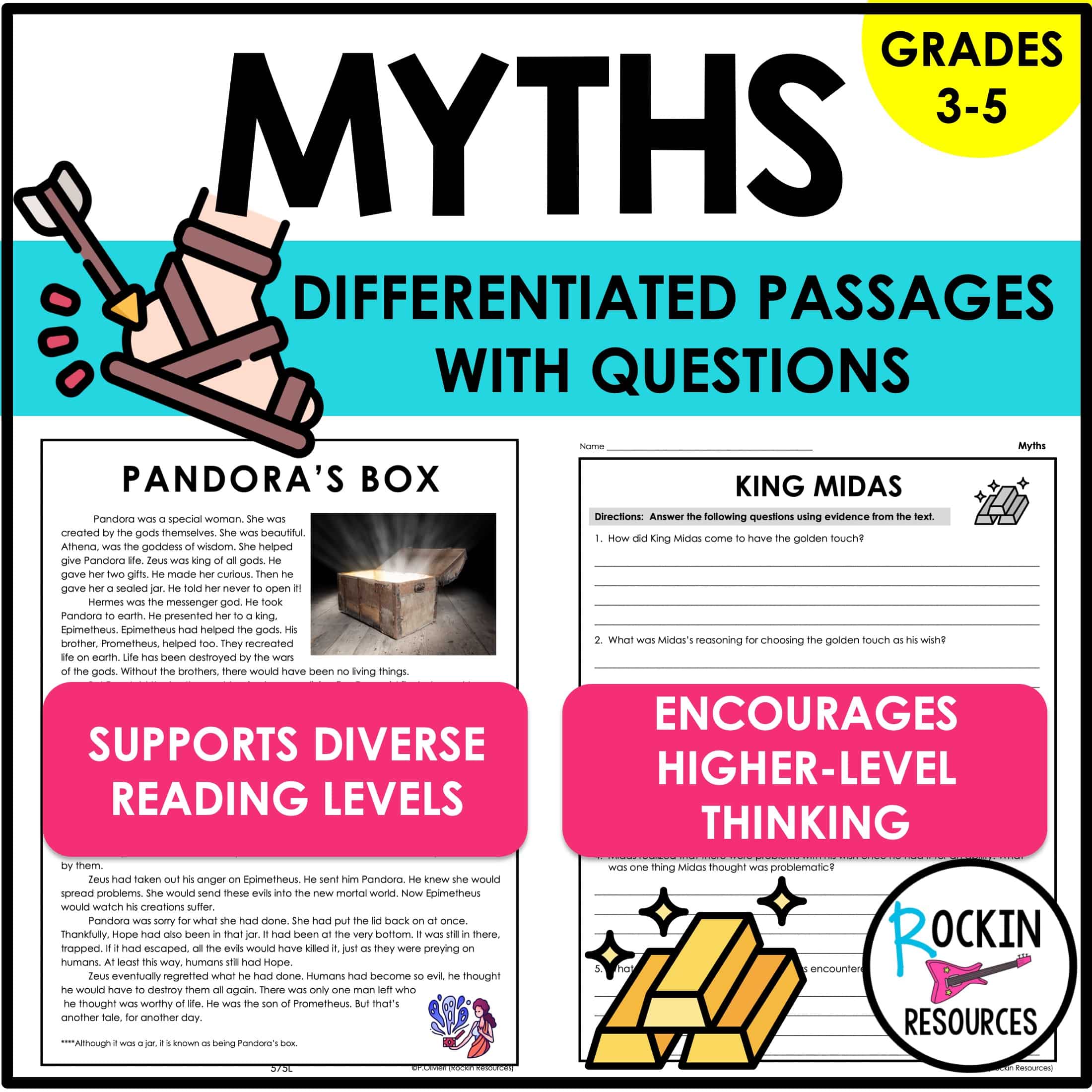
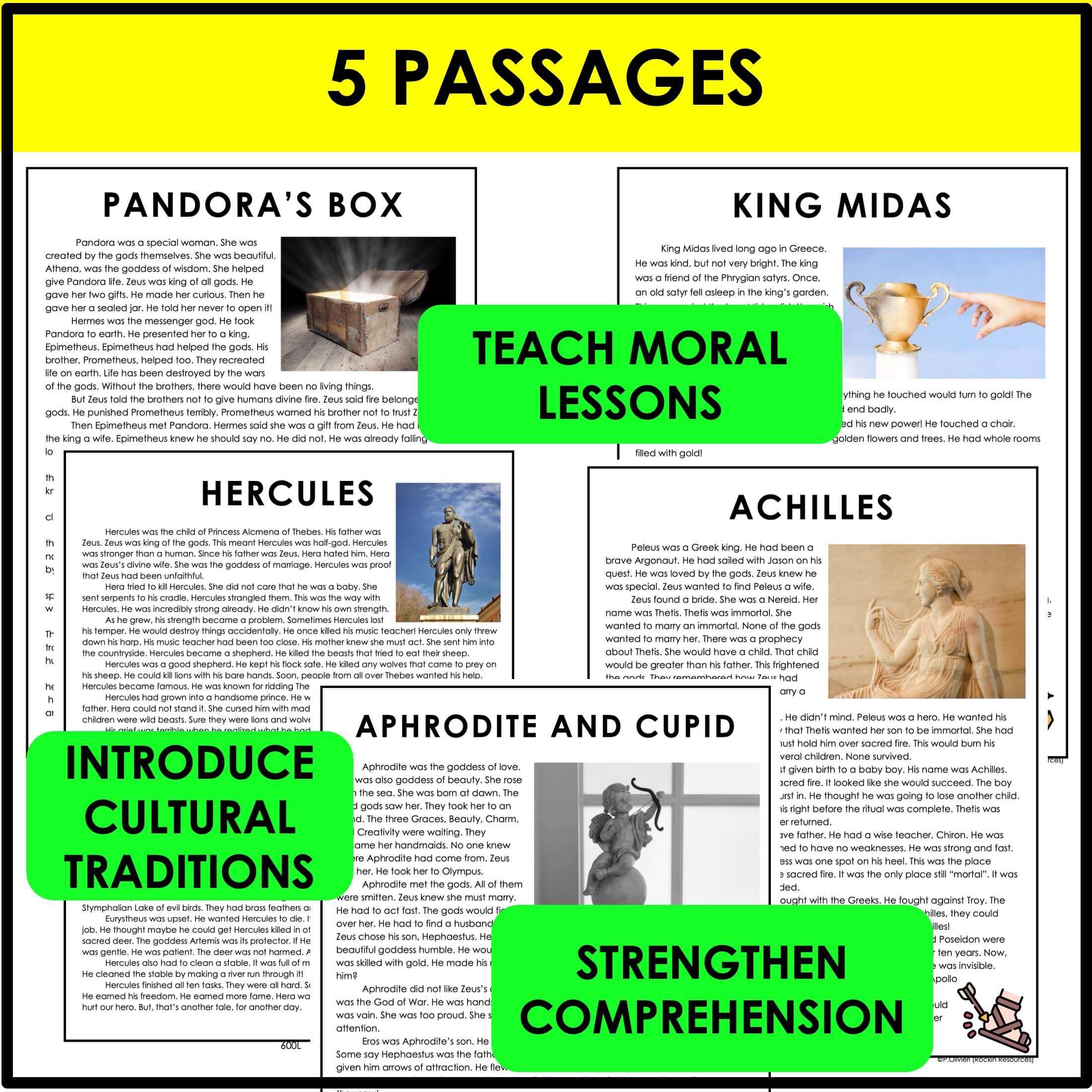

The following myths are included:
1. Pandora’s Box
2. King Midas
3. Hercules
4. Achilles
5. Aphrodite and Cupid
Why Teach Myths?
Myths capture students’ imaginations while building important literacy skills. These traditional stories help students:
- Explore ancient cultures and storytelling traditions
- Understand themes, morals, and life lessons
- Practice inferencing and critical thinking
- Build vocabulary and comprehension skills through engaging narratives
Because myths are rich with characters, conflicts, and lessons, they provide excellent opportunities for students to analyze text and discuss deeper meanings.
Why Teachers Love It
Teachers appreciate how easy this resource makes differentiated instruction. With multiple reading levels of the same story, teachers can:
- Meet the needs of diverse readers without creating separate lessons.
- Keep the class focused on the same myth and discussion topics.
- Use the passages for small groups, whole-class instruction, centers, or independent practice.
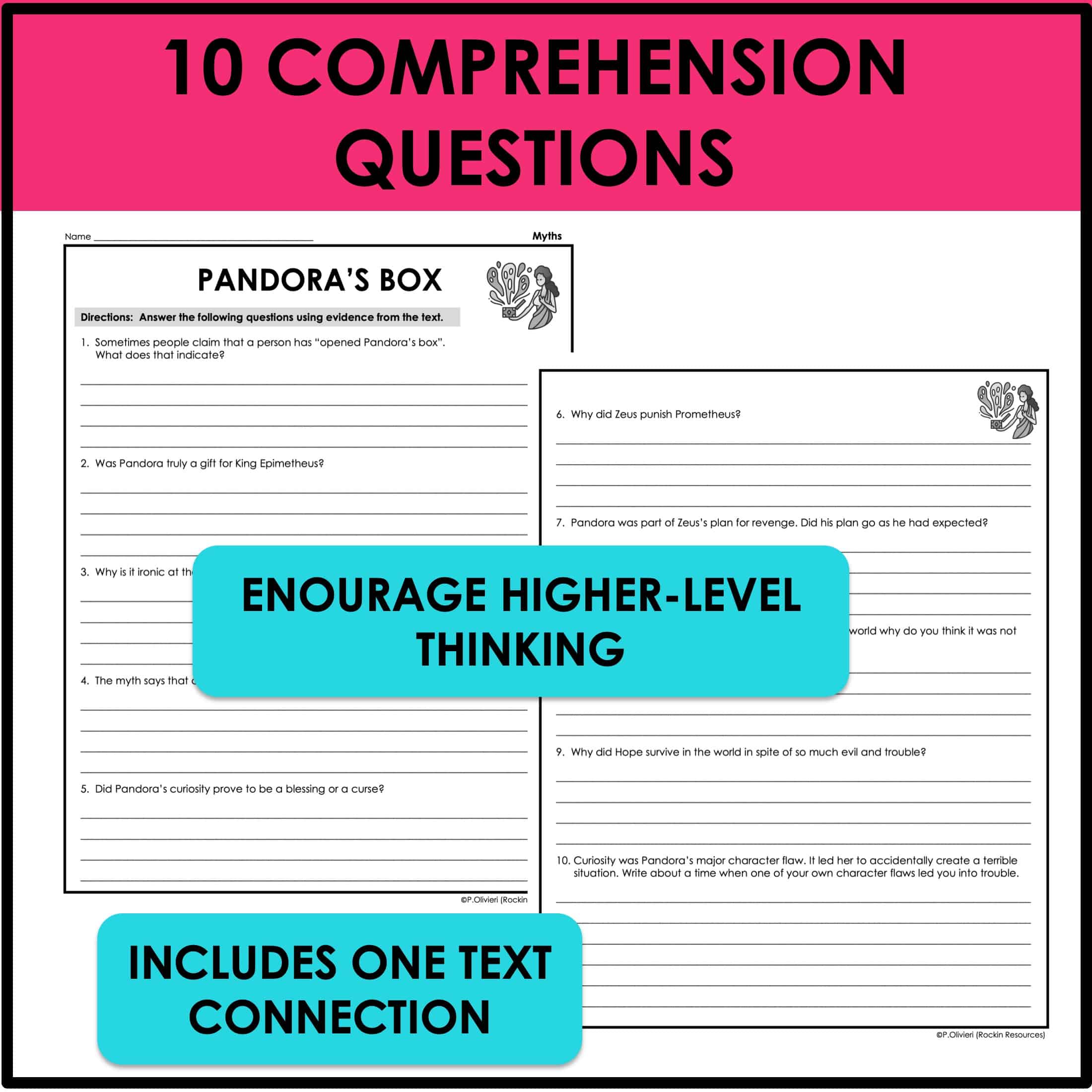
- Quickly assess comprehension through ready-to-use questions and writing responses.
This resource helps you engage readers, strengthen comprehension skills, and introduce the timeless appeal of myths—all while simplifying differentiation in your classroom.
This resource is aligned with 4th Grade Common Core Standards RL.4.4
Determine the meaning of words and phrases as they are used in a text, including those that allude to significant characters found in Mythology (e.g., Herculean).
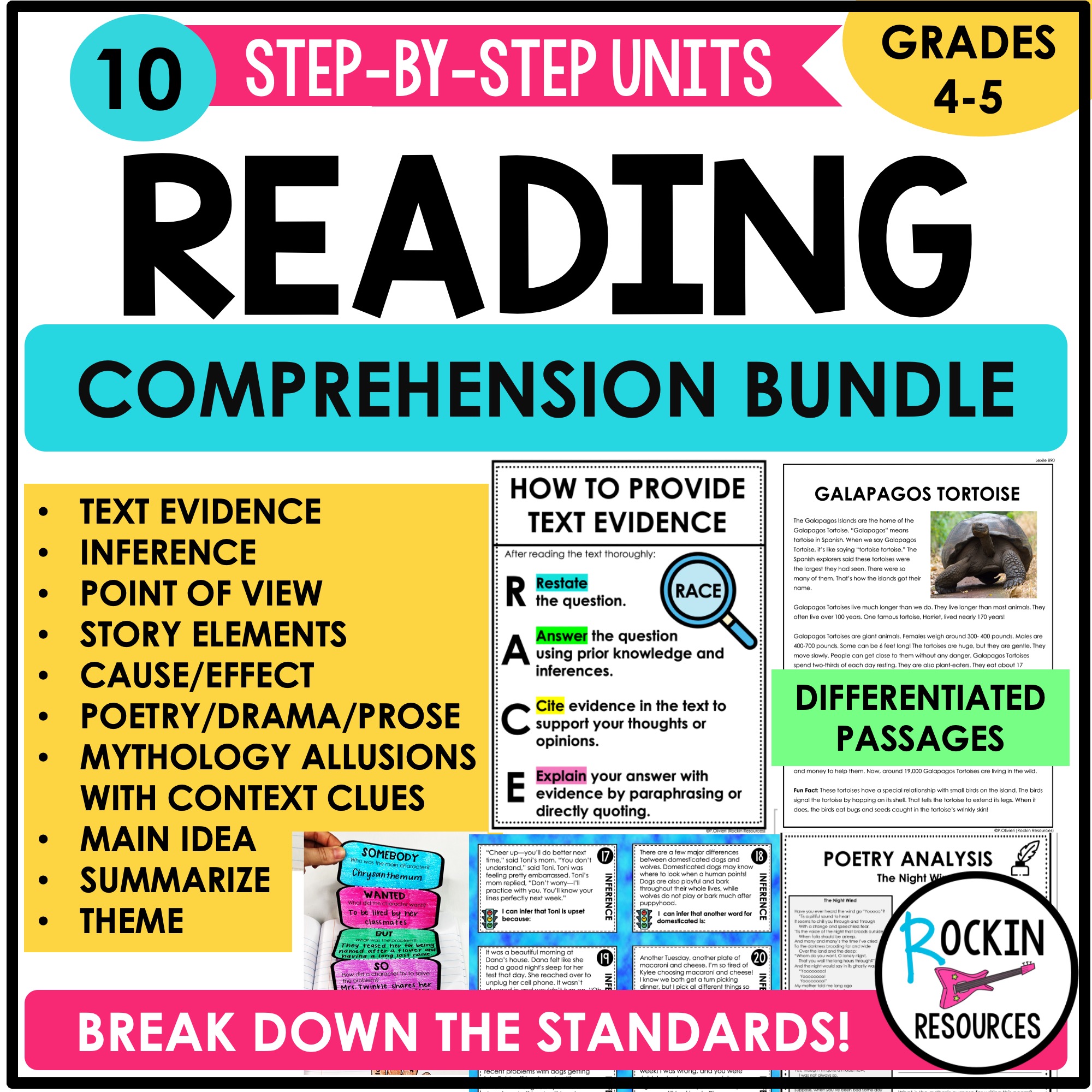
It was created to support my Step-by-Step Mythology Unit that explores context clues and allusions. It has activities, interactive pages, anchor charts, practice, and assessments.
Thank you for visiting my store!
Pam



Reviews
There are no reviews yet.