Many states have adopted a TDA (Text-Dependent Analysis) style of assessment for the writing component of their state tests. This writing style requires students to read a text or passage and use the actual text to support their answers, citing specific evidence directly from it. Text-dependent analysis writing instructs students to provide specific evidence from the passages they read, while demonstrating the ability to interpret the meaning of that evidence. How do you teach this kind of complex process to students?
TDA Questions List:
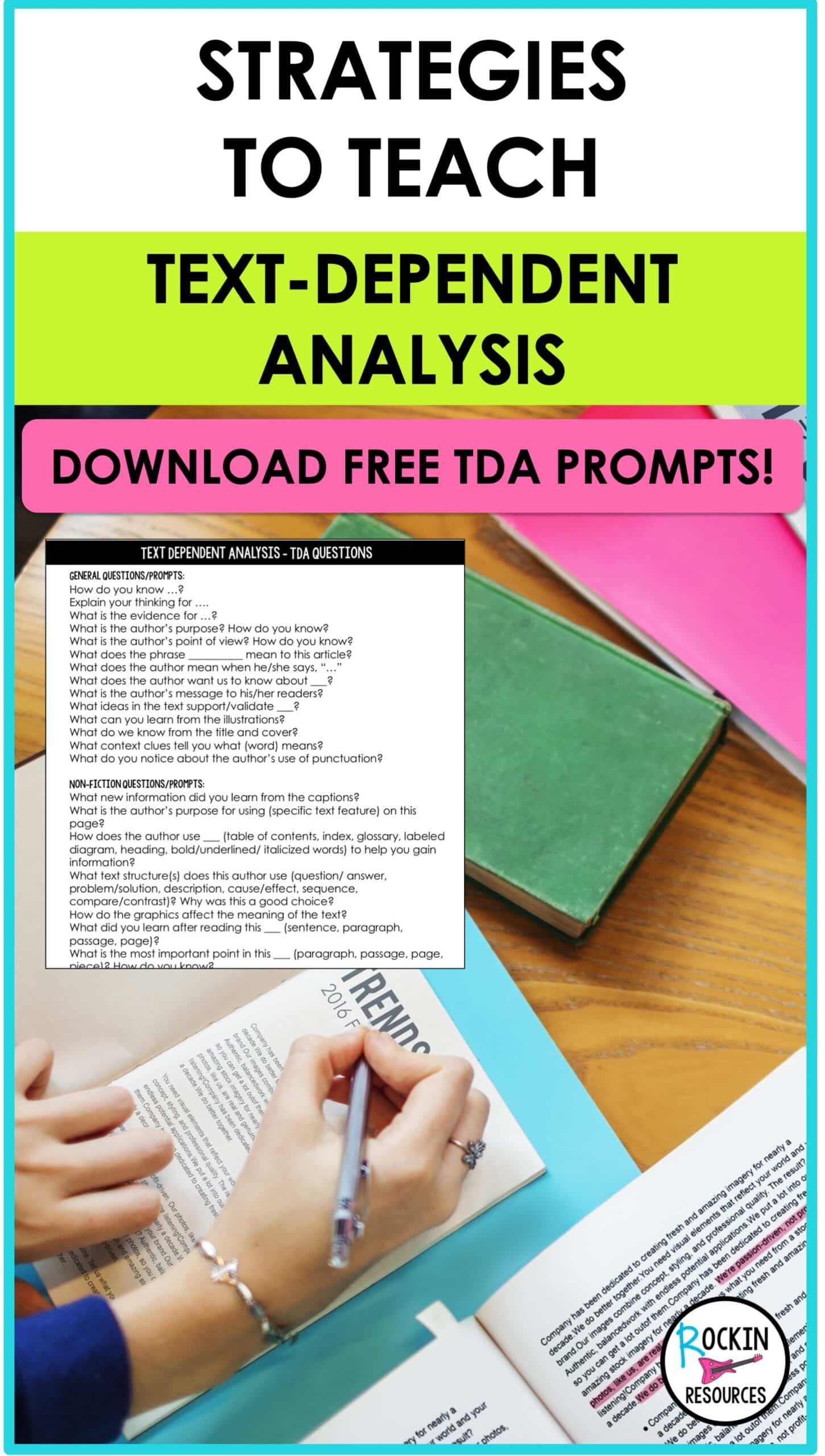
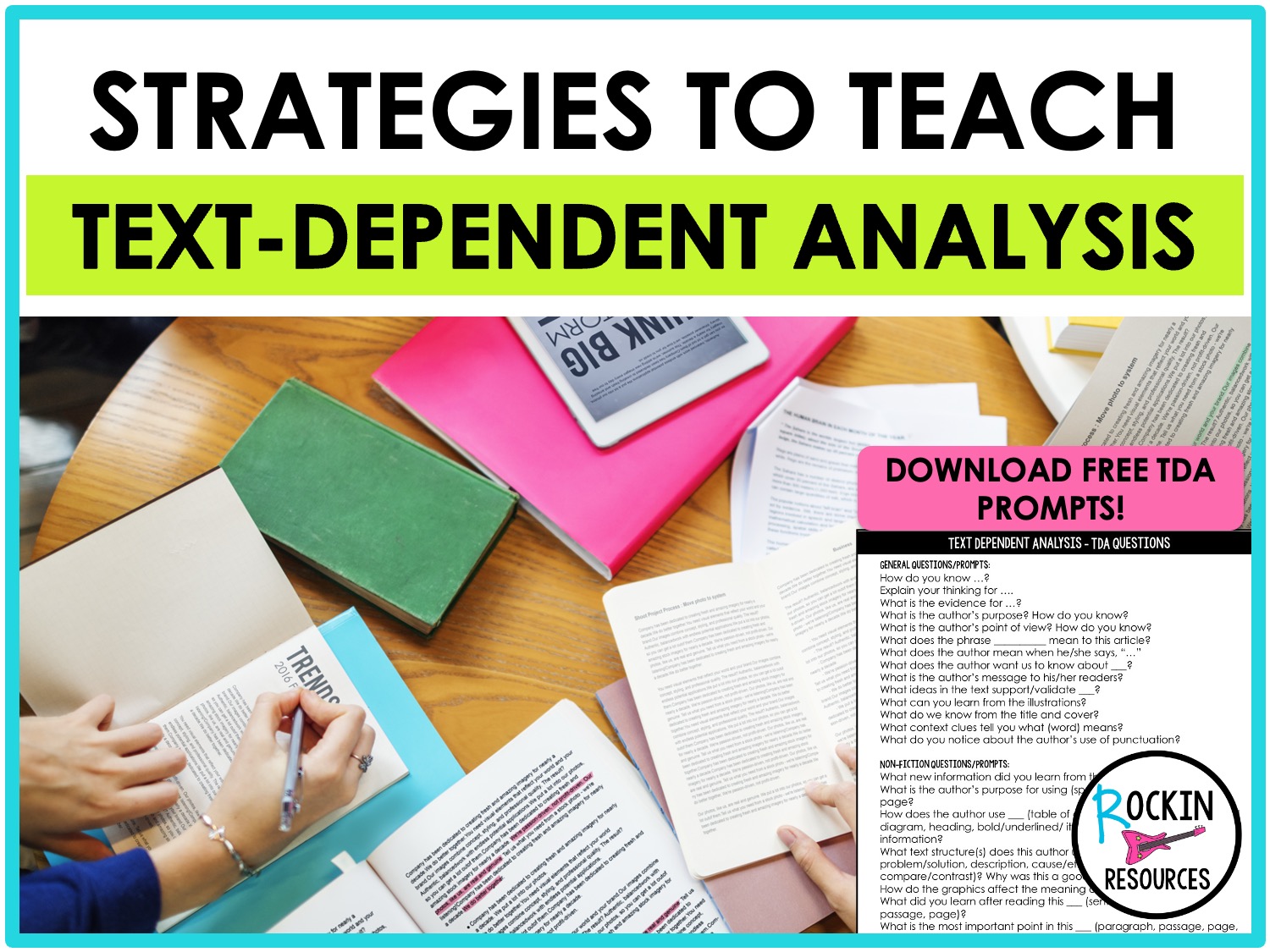
It’s important for you, as the teacher, to first generate a personal list of text-dependent questions/prompts before bringing this process into the classroom. You know your class and your standards. What types of questions are most effective for your expectations and outcomes? Write down as many text-dependent analysis, or TDA, questions/prompts as you can think of on a scratch piece of paper. Use this list of questions/prompts to guide you! It is available for FREE in my VIP FREEBIE ALBUM.
Acronym:
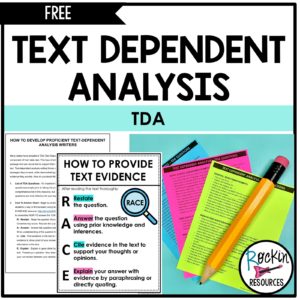
Begin by working as a whole group to create an acronym that encompasses the classroom TDA writing process. Developing an acronym together will not only help students take ownership but also give them a guide for remembering HOW TO answer the questions. Would you rather have an acronym prepared for your class? No problem. Work with ACE- This is an acronym I use in my Text Evidence resource. A-Answer the Question C-Cite the Evidence E-Explain your answer. If time is a factor, you don’t have to reinvent the wheel! You can find other examples of acronyms used by teachers, such as RACE, WHIP, and QUAN, on Pinterest. These examples can be used with your class to help HOW TO answer the questions or to brainstorm key ideas for your own acronym. Here are some ideas to guide your students.:
- Read the questions thoroughly to understand the important words. Underline the keywords.
- Answer the questions using prior knowledge and inferences/predictions. Show understanding of the question by restating it in your answer.
- Find evidence in the text to support your thoughts and opinions. Note the evidence to show proof of your answer. Find facts, quotes, and data.
- Explain in great detail by paraphrasing and directly quoting areas of the text. Extend your question. How does your evidence support your answer? What is the connection between your answer and the evidence? Be simple and to the point. You don’t want to create an acronym with more than 4 letters, especially with elementary-level students, but you do want a comprehensive classroom guide for the process.
Student TDA Questions List:
Do the same activity from above with your students. Ask them to write down as many TDA questions/prompts as they can think of in 5-10 minutes. Allow them to work in pairs or groups, then work as a class to create a student-generated class list of questions/prompts. Combine their list with your list. Try to break the questions into sections (fiction, non-fiction, author’s purpose, etc) to make it easier in the future to find the appropriate questions/prompts based on the type of reading. This activity will help students remember the questions they can ask themselves while reading a passage, which, in turn, will deepen their understanding of the text.
Brainstorm Sentence Starters:
- Brainstorm together sentence starters for providing text evidence in their writing. For example:_____ quoted, “…”On page ____, it states…In paragraph ____, the text says…
- The author wrote, “…”
- The graphic/illustrations/map/chart indicate…
- According to the text…
- _____provides proof that…
- From what I read in the text, I understand…
- Based on _____ in the text, I think…
- I think the author mean _____ because he/she says _____.
- _____is an example of _____.
Post Acronym:
Be sure to post the class-generated acronym, prompts/questions, and useful resources in a place where each student can clearly see them. Create simple lists of questions/prompts and post them on your classroom walls. Review them daily and before a TDA essay. Repetition is an effective method for long-term memory!
Take notes:
Depending on what is best for your class, either have your students take notes on the resources or provide them with a small acronym anchor chart, a list of questions, and sentence starters for their reading notebook. This TDA resource will be valuable for independent work and homework.
Model:
The first TDA should be done together as a class. Read a text and write the essay together as a whole group. Students will be able to see a strong example of how to build an effective TDA essay.
Practice:
Give students a text and allow them to use the TDA wall or student resources to guide them through the process. You may want to begin with partner work and ease into independent work.
Fairy tales are quick reads, but they have tons of elements that make them great for TDAs. Student experience with the structure and topics included in fairy tales will give them the confidence they need to branch out and take risks in their responses. Some ideas for daily TDAs with popular fairy tales might include the following:
One theme of “Cinderella” is to hold onto your dreams. Write an essay explaining how key details in the story support this theme. Use evidence from the story to support your answer.
How does the original wish of the King and Queen in “Sleeping Beauty” drive the plot of the story? Use specific evidence from the text to support your answer.
Try this TDA question stem for any fairy tale or multicultural version of a fairy tale students have not previously read: Can you tell if __________ describes a particular culture? How do you know? Would the story be different if set in a different culture/setting? Use evidence from the text to support your answer.
Assessment:
Provide students with a TDA assessment. Have them work independently without guidance.
Tracking:
Track your students’ progress. This will be helpful when forming small groups and reteaching. I hope you learned some strategies to bring into your classroom!
Keep rockin’!

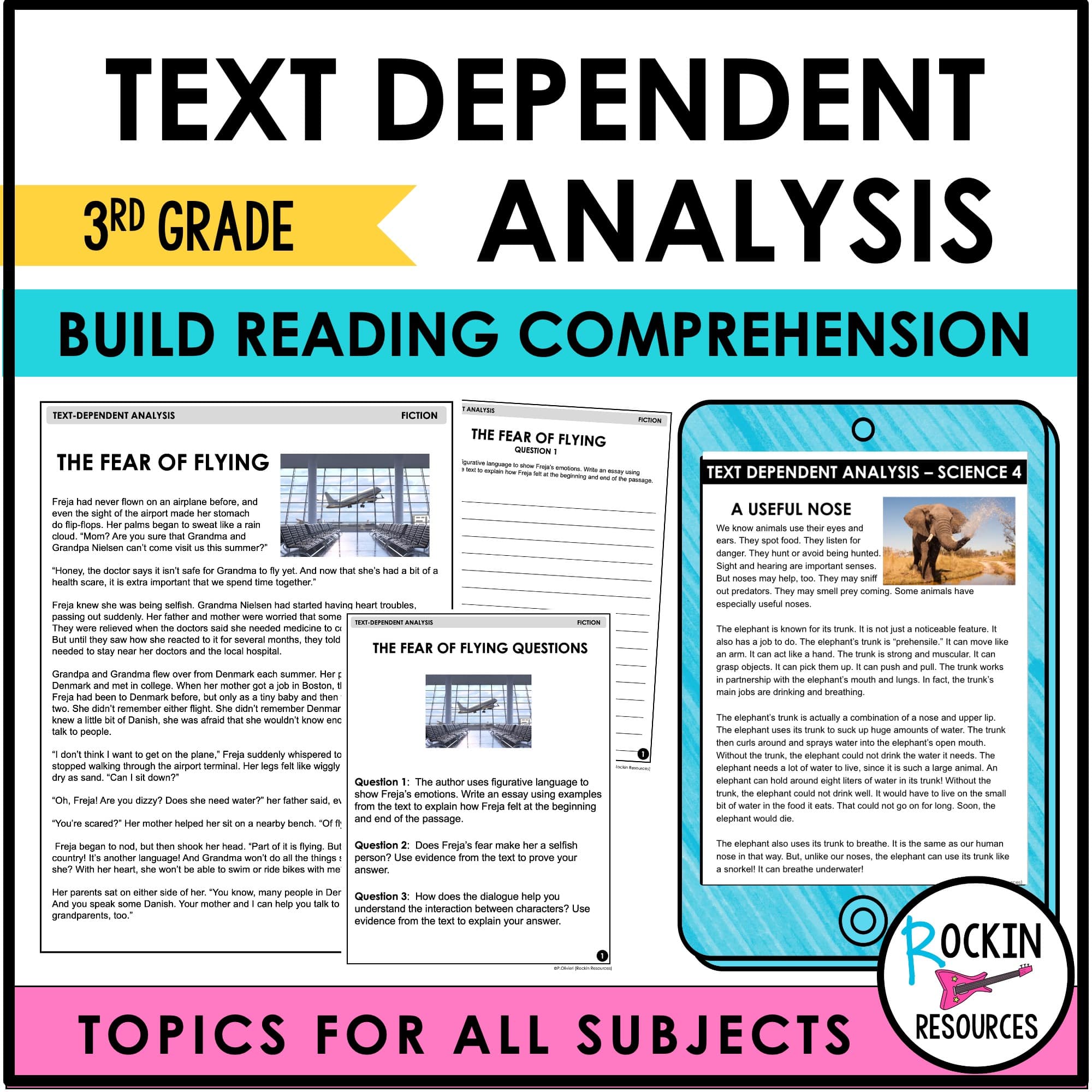
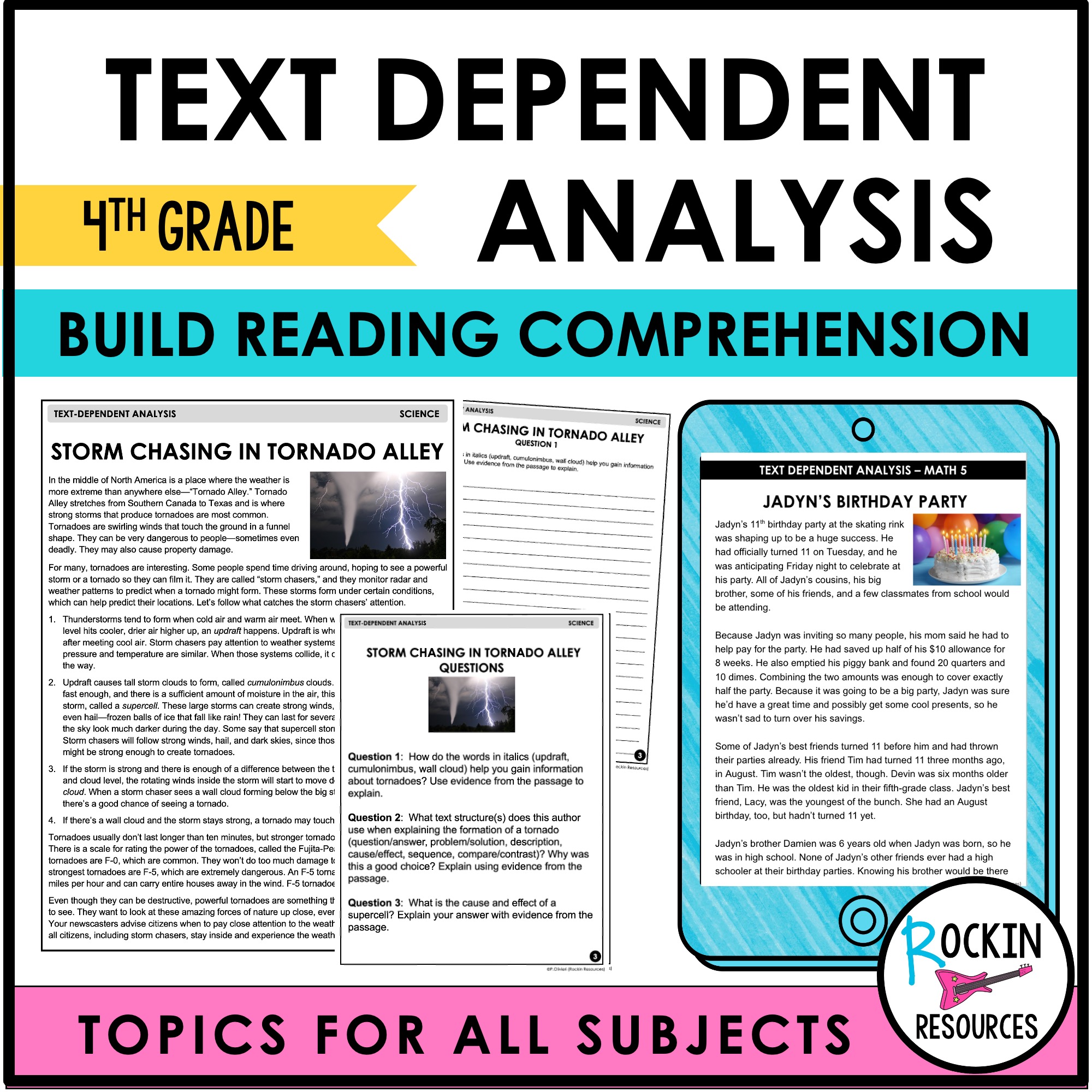
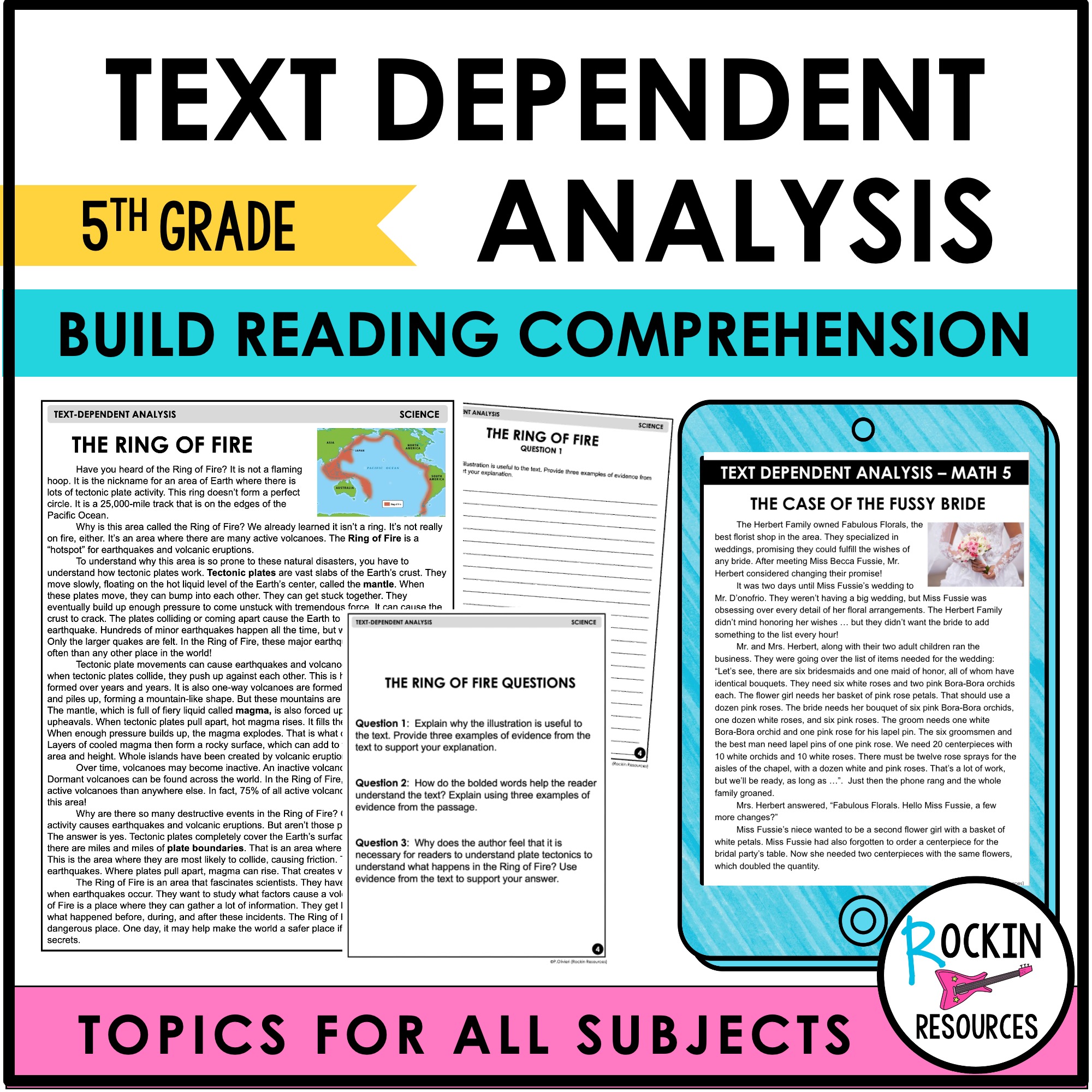
These ideas as well as passages, questions, writing templates, rubric, and tracking chart are all included in the Text Dependent Analysis resource. Click below to learn more. There are TDA practice passages for Grades 3, 4, and 5.
SEE SIMILAR BLOGS:

DISCOVER RELATED RESOURCES:
-
Sale!

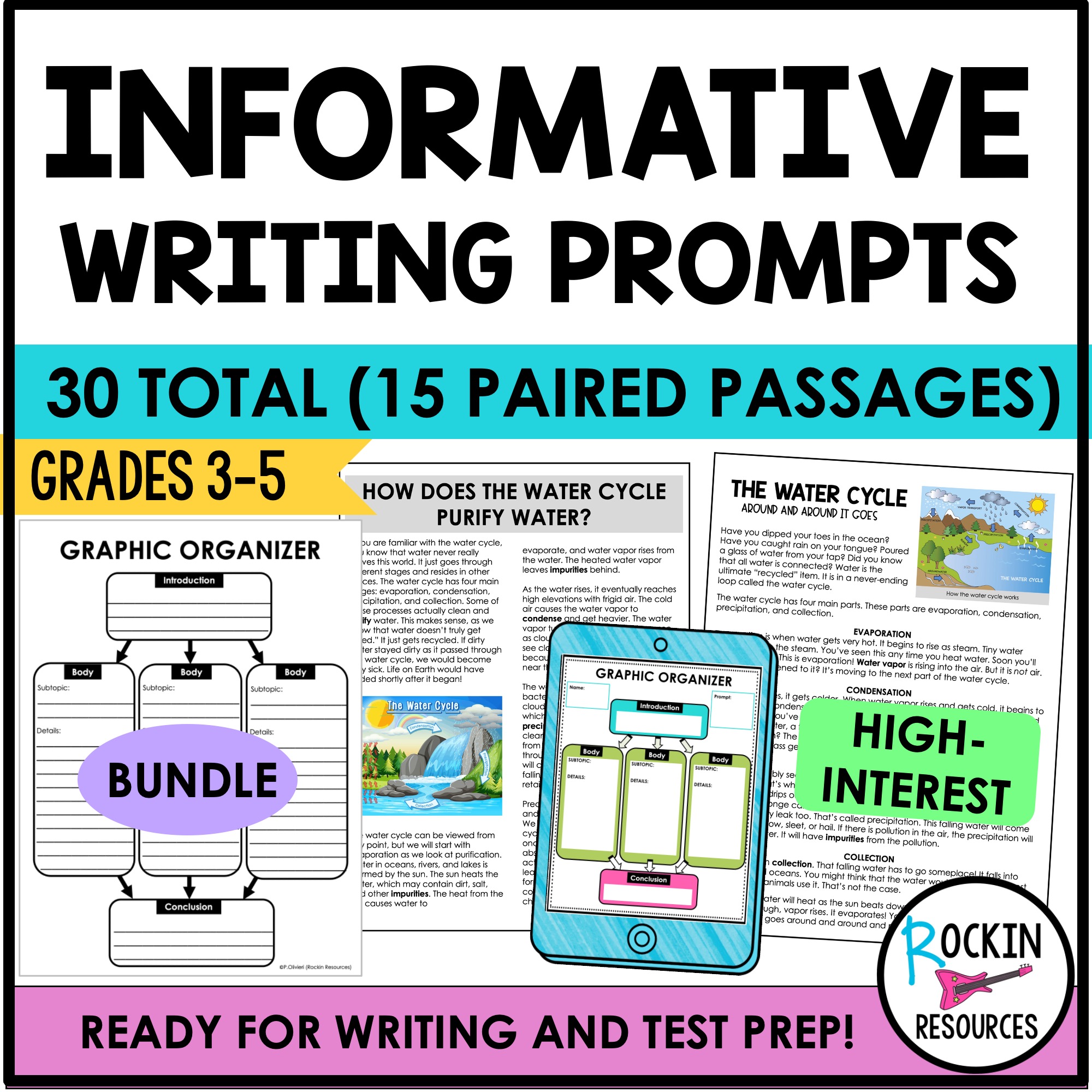
Informative Writing Prompt Passages Bundle
Original price was: $8.00.$7.00Current price is: $7.00.


SHARE THIS POST ON PINTEREST: